7 key factors to consider when buying an autoclave sterilizer
Nov 03,2026


Article overview
This guide covers 7 essential factors for purchasing an autoclave sterilizer, including cycle types, chamber capacity, Indonesian regulatory compliance, material compatibility, operational costs, validation protocols, and after-sales support—designed for clinics, labs, and small healthcare businesses.
Table of contents
- 1. Understanding what an alat sterilisasi autoclave actually does
- 2. Factor 1: Sterilization cycle type — gravity vs. pre-vacuum
- 3. Factor 2: Chamber size and load capacity
- 4. Factor 3: Regulatory compliance and local certification in Indonesia
- 5. Factor 4: Material compatibility — what can and cannot be autoclaved
- 6. Factor 5: Operational costs, water consumption, and ROI
- 7. Factor 6: Validation tools, indicators, and calibration schedule
- 8. Factor 7: After-sales support, spare parts, and long-term reliability
- 9. Frequently asked questions
Understanding what an alat sterilisasi autoclave actually does
Alat sterilisasi autoclave adalah a sealed pressure vessel that uses saturated steam at high temperature—typically 121°C at 15 psi—to destroy all forms of microbial life, including bacterial spores, on instruments and materials placed inside it.
This definition matters because many buyers focus on the price tag before understanding the underlying mechanism. The steam does not sterilize by pressure alone; pressure is simply the vehicle that raises water's boiling point high enough for heat to penetrate every surface and kill resistant microorganisms. Think of it like a pressure cooker in a professional kitchen—except the stakes are patient safety, not a meal.In Indonesian healthcare settings, an autoclave sterilizer machine is the gold standard for reprocessing reusable surgical instruments, dental handpieces, laboratory glassware, and wrapped sterile packs. According to autoclave sterilization principles, a properly run cycle achieves a Sterility Assurance Level (SAL) of 10⁻⁶, meaning the probability of a surviving microorganism is less than one in a million. That standard is non-negotiable for accredited facilities.
With that foundation in place, let's examine the seven factors that should drive your purchasing decision in 2026.
Factor 1: Sterilization cycle type — gravity vs. pre-vacuum
The single most important technical specification when selecting a steam sterilization equipment unit is the cycle type, because it directly determines which instruments you can safely sterilize and how fast you can turn them around.
Gravity displacement autoclave: reliable but slower
A gravity displacement autoclave works by allowing steam to push air downward and out through a drain valve. It is simpler, more affordable, and well-suited for solid, unwrapped instruments and certain laboratory media. The standard cycle runs at 121°C for 15–30 minutes. In actual practice, this type is adequate for basic laboratory sterilization tasks—boiling flasks, open metal trays, and bulk liquids. However, it struggles with porous loads and hollow-lumen instruments, because residual air pockets can insulate surfaces from steam contact.
Pre-vacuum autoclave system: the clinical gold standard
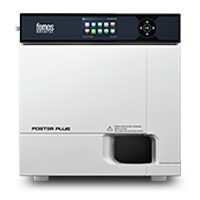
A pre-vacuum autoclave system, also called a Class B autoclave under EN 13060, uses multiple vacuum pulses before steam injection to eliminate air from even the most complex loads—wrapped packs, dental handpieces, tubular instruments, and textile drapes. Operating at 132–135°C, a B-class cycle completes in just 3–4 minutes at temperature. Real-world testing in dental clinic environments confirms that pre-vacuum units consistently pass the Bowie-Dick (B&D) test, which validates air removal efficiency. For any dental or surgical facility in Indonesia seeking Kemenkes accreditation or SNARS compliance, a B-class medical autoclave device is effectively mandatory.
Why do so many buyers overlook this distinction? Often because entry-level price points lead procurement teams toward N-class or S-class machines that cannot handle wrapped or lumened instruments—a mismatch that surfaces only during the accreditation audit.
"The classification of steam sterilizers into types N, S, and B under EN 13060 is not a marketing tier—it is a functional capability boundary. Using an N-class unit for wrapped dental instruments is a compliance failure, not just a performance shortcoming." — Industry consensus among medical device sterilization specialists, 2026.
Factor 2: Chamber size and load capacity
Matching chamber volume to your actual daily instrument volume prevents two costly mistakes: overpaying for unused capacity, or running back-to-back cycles that bottleneck your workflow.
Benchtop autoclave units for small to medium clinics
A benchtop autoclave unit typically ranges from 8 to 23 litres. For a single-chair dental clinic in Jakarta or Surabaya processing 15–25 patients per day, a 17–22 litre B-class benchtop unit generally provides sufficient throughput. Real-world case data from Indonesian dental practices suggests that a 22-litre unit running 6–8 cycles per day can support two to three treatment rooms without workflow disruption, provided instrument sets are pre-packaged efficiently.

Larger horizontal units for hospitals and laboratories
Hospital central sterile supply departments (CSSD) and research laboratories require floor-standing or pass-through hospital sterilization equipment with chambers from 50 litres upward. These units handle bulk surgical instrument sets, wrapped drape packs, and even biohazard waste sterilizers for infectious material. When specifying a large unit, factor in door-opening direction (single vs. double-door pass-through), trolley compatibility, and utility connections—steam, water, and drainage—before finalizing the purchase order.
Factor 3: Regulatory compliance and local certification in Indonesia
Compliance is not optional—it is the baseline. In Indonesia, any alat sterilisasi autoclave used in a licensed healthcare facility must meet requirements set by Kementerian Kesehatan (Kemenkes) and, for accredited hospitals and clinics, the Standar Nasional Akreditasi Rumah Sakit (SNARS).
Izin edar and Kemenkes device registration
Every medical autoclave device sold in Indonesia must hold an active izin edar (marketing authorization) issued by the Direktorat Jenderal Kefarmasian dan Alat Kesehatan. Before purchasing, request the product's izin edar number and verify it on the official SIPA/ASPAK database. Buying an unregistered unit—regardless of international certifications—exposes your facility to administrative sanctions during inspection. According to updated medical device sterilization frameworks, traceability documentation is equally important at the point of use.
International standards that support local compliance
Units carrying CE marking under EN 13060 and manufactured under ISO 13485:2016 quality management systems give Indonesian buyers a solid compliance foundation. The ISO 13485 certification means the manufacturer's entire production process—from design control to post-market surveillance—is audited to medical-grade standards. This directly supports SNARS accreditation documentation requirements, which ask facilities to demonstrate that sterilization equipment meets recognized international standards. Always obtain the Declaration of Conformity and test certificates with your purchase.
Factor 4: Material compatibility — what can and cannot be autoclaved
One of the most overlooked factors in autoclave selection is understanding which materials survive the autoclaving temperature pressure cycle and which will be destroyed. Misloading is a leading cause of both instrument damage and sterilization failure.
Autoclavable materials: a quick-scan reference
| Material / item type | Autoclavable? | Notes | Recommended alternative |
|---|---|---|---|
| Stainless steel instruments | ✔ Yes | Standard; use lubrication post-cycle | — |
| Wrapped textile drapes | ✔ Yes (B-class only) | Pre-vacuum required for penetration | — |
| Dental handpieces | ✔ Yes (B-class only) | Lubricate before cycle; check manufacturer spec | — |
| Polypropylene plastics | ✔ Yes | Must be rated for 121°C+ | — |
| PVC / rubber components | ⚠ Limited | Degrades with repeated cycles | EO or plasma sterilization |
| Electronic components / cameras | ✘ No | Heat and moisture will destroy them | Low-temperature plasma (H₂O₂) |
| Sharp-edged cutting tools | ✔ Yes | Pack carefully to protect edges | — |
| Heat-sensitive implants | ✘ No | Manufacturer SOP governs | Ethylene oxide (EO) gas |
Sterilization method comparison: making the right choice
Steam remains the preferred method for the vast majority of reusable instruments, but understanding alternatives helps when steam is not appropriate. Dry heat sterilizers work for items that cannot tolerate moisture but require much longer exposure times (160–180°C for 1–2 hours). Ethylene oxide (EO) gas penetrates complex geometries and is suitable for heat-sensitive items, but requires long aeration cycles and careful handling due to toxicity. Hydrogen peroxide plasma is a modern low-temperature option excellent for electronics and delicate optics. According to established sterilization practices, the choice of method must always be matched to the instrument's material tolerances and the intended use classification.
Factor 5: Operational costs, water consumption, and ROI
Purchase price is only the opening figure. The true cost of owning a steam pressure vessel sterilizer is determined by ongoing water, electricity, consumables, and maintenance expenditure—factors that Indonesian buyers frequently underestimate.
Estimating cost per sterilization cycle
A standard B-class benchtop unit (17–22 litre) consumes approximately 2–3 litres of distilled or purified water per cycle and draws between 1.8–2.5 kW during the heating phase. At Indonesia's 2026 average commercial electricity rate of approximately Rp 1,450–1,600 per kWh, a full cycle costs roughly Rp 4,000–7,000 in electricity alone. Add distilled water costs (Rp 500–1,200 per cycle if using a standalone water purification unit) and consumables—chemical indicator pouches, biological indicator vials for periodic testing—and a realistic per-cycle operational cost ranges from Rp 8,000 to Rp 18,000 depending on equipment specification and consumable brand.
The hidden cost of poor water quality
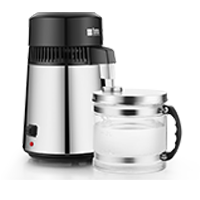
In many Indonesian regions, tap water hardness is high enough to cause scale buildup inside the pressure sterilization chamber within months. Scale acts as thermal insulation, reducing steam quality and cycle efficiency. More critically, mineral deposits can damage heating elements and sensors, triggering costly repairs. Using an integrated water distillation or purification unit (targeting conductivity below 5 μS/cm) is not a luxury—it is a direct investment in extending the autoclave's service life by several years. Facilities that skip this step typically face their first major repair within 12–18 months of operation.
Of course, there are situations where a small practice with very low cycle volume might find a basic unit economically justified in the short term. Nonetheless, a full ROI calculation over a 5–7 year equipment lifespan almost always favors investing in water treatment upfront.
Factor 6: Validation tools, indicators, and calibration schedule
Owning a high-quality autoclave sterilizer machine is only half the equation. Proving it works—on every cycle, to every auditor—requires a structured validation and monitoring protocol.
Daily and per-cycle monitoring with chemical and biological indicators
A robust daily SOP for operators of a dental autoclave machine or any clinical unit should follow this sequence:
- Inspect chamber door seal and drain filter before the first cycle.
- Run the Bowie-Dick (B&D) test as the first cycle of the day to confirm air removal efficiency.
- Verify that each pouch includes a Class 4 or Class 5 chemical indicator strip, and check for color change after every load.
- Record temperature, pressure, and cycle time from the built-in printer or data logger for every run.
- Perform a biological indicator (BI) test with Geobacillus stearothermophilus spore vials at least weekly, or per SNARS requirements.
- Log results in the sterilization record book and retain records for a minimum of 3 years for accreditation audits.
- Drain residual water from the chamber and leave the door slightly ajar overnight to prevent moisture buildup.
Calibration and troubleshooting common failures
Calibration of temperature sensors and pressure gauges should be performed by an accredited BPFK (Balai Pengamanan Fasilitas Kesehatan) technician or certified service provider at minimum annually—and more frequently if the unit runs more than 10 cycles per day. Common failure modes and their causes include: a failed Bowie-Dick test (indicating air leaks or a faulty vacuum pump); wet loads after cycle completion (caused by insufficient drying time, overloaded chamber, or condensate drainage issues); and error codes related to temperature sensor drift or door latch malfunction. Addressing these proactively through scheduled maintenance is far less expensive than emergency repairs during peak clinic hours.
Factor 7: After-sales support, spare parts, and long-term reliability
In Indonesia's healthcare equipment market, after-sales infrastructure is arguably the most undervalued factor at the time of purchase—and the most consequential over the life of the equipment.
Why local service capability matters more than price
A laboratory sterilization tool or clinical autoclave that breaks down in Makassar or Medan is useless if the nearest certified technician is in Jakarta and spare parts take three weeks to arrive. When evaluating suppliers, ask specifically: Is there a certified local service partner in your province? What is the guaranteed response time for critical failures? Are common consumable parts—door seals, heating elements, vacuum pump components—stocked locally?
Features that reduce long-term maintenance burden
Modern benchtop B-class units designed for 2026 clinical environments incorporate several features that directly reduce maintenance frequency and downtime. Adjustable door seals that compensate for gradual wear extend the interval between seal replacements. Dual or triple data recording systems—onboard thermal printer, SD card, and USB export—ensure that a single hardware failure does not result in lost sterilization records. Units with AI-assisted self-diagnostic functions can alert operators to emerging issues before they cause cycle failures. These are not premium extras; they are practical reliability investments that pay back within the first year of clinical use.
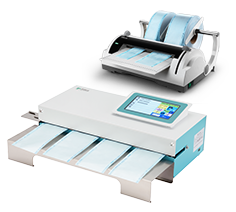
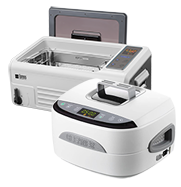
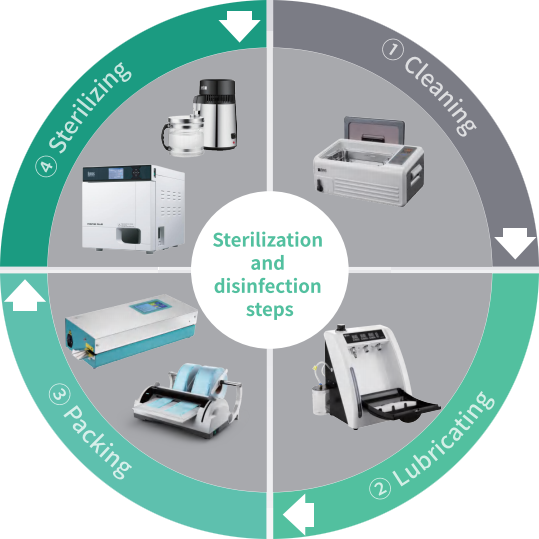
A complete sterilization workflow also extends beyond the autoclave unit itself. Integrating an ultrasonic cleaner to reduce bioburden before autoclaving, a sealing machine for proper pouch preparation, and a purified water source creates a validated, closed-loop process that consistently meets the performance expectations of an alat sterilisasi autoclave system. This end-to-end approach is increasingly the standard recommended by infection control bodies across Southeast Asia in 2026.
Evaluating total cost of ownership before you buy
Bringing all seven factors together, a structured evaluation framework helps avoid buyer's remorse. Before signing any purchase order for a surgical instrument sterilizer or dental unit, verify the following checklist: cycle type matches your instrument portfolio; chamber volume supports your daily patient load; izin edar is active and verifiable; material compatibility list has been reviewed against your current instrument inventory; 5-year operational cost estimate has been calculated; a validation and calibration schedule is in place; and local after-sales support has been confirmed in writing. This due diligence takes perhaps two to three hours but protects an investment that will serve your facility for a decade.
Frequently asked questions
Q: What is the difference between a Class B and Class N alat sterilisasi autoclave?
A: A Class B autoclave uses pre-vacuum cycles to sterilize all load types—wrapped, hollow, and porous—making it mandatory for dental and surgical facilities. A Class N unit handles only solid, unwrapped instruments and is unsuitable for pouched or lumened items. Choosing the wrong class is a common compliance failure during Kemenkes and SNARS accreditation inspections.
Q: How often should an autoclave sterilizer be calibrated in Indonesia?
A: At minimum, annual calibration by a BPFK-accredited technician is required. High-volume facilities running more than 8–10 cycles daily should schedule calibration every 6 months. Calibration records must be retained and made available during accreditation audits as evidence of equipment performance validation.
Q: What water should I use in a dental autoclave machine?
A: Always use purified or distilled water with conductivity below 5 μS/cm. Using tap water in Indonesia—where mineral hardness is often elevated—causes scale buildup inside the chamber and on heating elements, reducing sterilization efficiency and voiding most manufacturer warranties within 12–18 months of operation.
Q: Can an autoclave sterilizer process all types of dental instruments?
A: Most metal dental instruments, handpieces, and reusable mirrors are autoclavable in a B-class unit. However, heat-sensitive items—certain impression trays, light-cured resin tools, and electronic components—must not be autoclaved. Always consult the instrument manufacturer's reprocessing instructions and cross-check against your autoclave's validated load types.
Q: What documentation does a clinic in Indonesia need to maintain for its autoclave?
A: Required documentation includes: cycle logs with temperature, pressure, and time data for every run; daily Bowie-Dick test results; weekly or monthly biological indicator test records; annual calibration certificates from a certified technician; and the unit's izin edar and manufacturer Declaration of Conformity. SNARS accreditation reviewers routinely request at least 3 months of continuous sterilization records.
Conclusion: make an informed investment in sterilization safety
Selecting the right alat sterilisasi autoclave is not simply a procurement task—it is a clinical safety decision that affects every patient treated in your facility and every accreditation review your team faces. The seven factors covered in this guide—cycle type, chamber size, regulatory compliance, material compatibility, operational costs, validation protocols, and after-sales support—collectively define the total value of your investment. Evaluate each factor methodically, involve your infection control team in the decision, and prioritize long-term reliability over the lowest initial price point. In 2026, the Indonesian healthcare landscape demands nothing less.
More

No.205 Guangyuan Road Jiangbei District Ningbo 315033 CHINA