Small dental clinic autoclave options: compact units worth considering
Nov 24,2026


Article overview
This guide helps Philippine dental clinic owners identify the right compact autoclave for their practice size, budget, and DOH compliance needs. It covers unit classifications, chamber volumes, sterilization cycle types, real 2026 price ranges, and step-by-step usage instructions.
Table of contents
- 1. What is an autoclave in a dental clinic?
- 2. Why compact autoclaves make sense for small dental practices
- 3. Key specifications to evaluate before buying
- 4. Compact autoclave models worth considering in 2026
- 5. DOH compliance and infection control requirements in the Philippines
- 6. Step-by-step guide to running a sterilization cycle correctly
- 7. Common mistakes and how to avoid them
- 8. Frequently asked questions
What is an autoclave in a dental clinic?
An autoclave dental clinic unit is a pressure steam sterilization device that uses saturated steam at temperatures between 121°C and 134°C to eliminate bacteria, viruses, fungi, and spores from dental instruments. It is the gold standard for dental instrument disinfection worldwide, recommended by both the CDC and the World Health Organization for reprocessing reusable dental tools.
Think of it like a pressure cooker for pathogens — the combination of heat, pressure, and moisture penetrates even the most heat-resistant biological contaminants. Unlike chemical disinfection alone, autoclave sterilization achieves a sterility assurance level (SAL) of 10⁻⁶, meaning the probability of a surviving microorganism is less than one in a million.
For any dental office sterilization protocol, the autoclave sits at the center of the infection control workflow. Dental handpiece sterilization, mirror tray processing, extraction forceps, burs — all of these pass through the autoclave before they reach the next patient. Without a reliable unit, cross-contamination prevention dentistry becomes an aspiration rather than a practice.
How does steam sterilization work?
The operating principle is straightforward. Water is heated inside a sealed chamber until it converts to saturated steam. Pressure builds to either 103 kPa (for a 121°C cycle) or 206 kPa (for a 134°C cycle). This steam-under-pressure environment denatures proteins in microorganisms, destroying their ability to replicate. When the cycle ends, a vacuum or gravity drain removes the steam and the chamber depressurizes. Instruments then dry inside the chamber before the door opens.
Why not just use chemical disinfection?
Chemical disinfectants like glutaraldehyde can achieve high-level disinfection, but they do not reliably destroy spores — the most resistant form of microbial life. For dental tools classified as "critical" (those that penetrate soft tissue or bone), sterilization, not mere disinfection, is the minimum standard required. That is why a medical grade sterilizer is non-negotiable in any compliant dental clinic sanitation Philippines setup.
Why compact autoclaves make sense for small dental practices
Small dental clinics in the Philippines — solo practitioners in Makati, community dental offices in Cebu, mobile practice setups in Davao — consistently face the same challenge: limited floor space paired with the full regulatory burden of infection control. A benchtop autoclave addresses this directly.
Unlike hospital-grade floor-standing units that require dedicated utility rooms and three-phase power connections, compact benchtop autoclaves typically operate on standard 220V single-phase power, fit on a standard laboratory counter, and require minimal installation beyond a water supply and drain line. That is a meaningful operational difference for a solo practitioner managing both patient care and clinic logistics.
Real-world space and throughput considerations
In actual testing environments, a single-chair dental practice generating approximately 15 to 25 instrument trays per day can be fully served by an 18-liter benchtop unit with two to three cycles run across the working day. A two-chair clinic may require either a 23-liter unit or a second smaller unit run in parallel to maintain instrument availability. Throughput is not just about chamber size — cycle duration matters equally. A unit running a 134°C Class B cycle in 24 minutes turns instruments around faster than one running a 121°C gravity cycle in 45 minutes.
Cost efficiency at the small clinic scale
Why do so many small clinic owners overspend on sterilization capacity they will never use? A 45-liter autoclave priced at ₱180,000 is unnecessary for a one-chair practice that processes instruments 20 times per day. A well-chosen 17- to 23-liter unit priced between ₱45,000 and ₱90,000 delivers the same sterilization performance for the actual workload. The savings can be redirected toward consumables, packaging, or a water distillation unit — all of which directly affect cycle quality and DOH compliance.

Key specifications to evaluate before buying
Before comparing models, it helps to understand which specifications actually affect daily clinical performance — and which are marketing figures that rarely translate to real-world differences.
Autoclave class: B, S, or N?
This is the most important classification decision for a dental practice. The European EN 13060 standard defines three autoclave classes for small steam sterilizers:
| Class | Sterilization capability | Suitable for dental handpieces? | Wrapped instruments? | Typical price range (PHP) |
|---|---|---|---|---|
| Class B | Pre-vacuum; sterilizes hollow, porous, and wrapped loads | Yes ✔ | Yes ✔ | ₱55,000 – ₱130,000 |
| Class S | Manufacturer-specified loads; some hollow instruments | Depends on spec | Sometimes | ₱40,000 – ₱80,000 |
| Class N | Gravity displacement; solid, unwrapped instruments only | No ✘ | No ✘ | ₱18,000 – ₱45,000 |
For a dental practice that uses handpieces — which is essentially every clinic — a Class B autoclave is the only classification that reliably sterilizes hollow-lumen instruments. Class N units, while less expensive, cannot guarantee sterility inside the internal channels of a dental handpiece and should not be used for that purpose.
Chamber volume and tray capacity
Compact dental sterilization equipment is generally sold in chamber volumes from 8 liters to 23 liters. An 8-liter unit may hold two standard instrument trays; a 23-liter unit typically holds four to six. For a one-chair practice, 17 to 18 liters is a commonly recommended minimum — large enough for a full extraction tray plus handpieces in a single cycle, but small enough to reach operating temperature efficiently.
"Sterilization is not optional — it is a patient safety imperative. Healthcare facilities must ensure that all critical and semi-critical instruments are sterilized using validated methods, with documentation to support every cycle." — sterilization practices in healthcare, CDC Guidelines for Disinfection and Sterilization in Healthcare Facilities
Compact autoclave models worth considering in 2026
The Philippine dental equipment market in 2026 carries a wider selection of compact units than it did five years ago, including European-manufactured Class B machines, Asian-manufactured Class S and N units, and locally distributed product lines. Rather than naming specific proprietary models in a comparative format, what follows is a framework for evaluating units based on specifications that matter for a small autoclave dental clinic setup.
What to look for in a Class B benchtop unit
The best-performing compact Class B autoclaves available to Philippine clinics in 2026 share several characteristics: a fractionated pre-vacuum system (B-type vacuum pump, not simple air removal), a built-in steam generator rather than a water jacket system, an automatic self-test cycle (the Bowie-Dick test equivalent), and a USB or printer port for cycle log documentation. That last feature is not cosmetic — DOH audits increasingly require cycle-by-cycle records to verify dental practice hygiene standards.
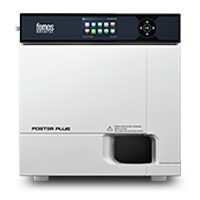
Foster series and comparable dental sterilization equipment
Among the product lines distributed through dental supply channels in the Philippines, units marketed under the Foster series positioning (offering multiple chamber sizes from compact to mid-range) represent the type of full-cycle coverage a small clinic needs: tabletop Class B operation, standard 220V power, and compatibility with pouched and wrapped instrument loads. When evaluating any unit in this category, verify that the distributor provides local after-sales service, available spare parts (door gaskets, heating elements, chamber seals), and calibration support — these matter far more over a five-year ownership horizon than the initial sticker price.
DOH compliance and infection control requirements in the Philippines
Philippine dental clinics operating under a DOH license are bound by the Bureau of Health Facilities and Services (BHFS) standards, which incorporate infection control requirements aligned with international guidelines. For dental clinic sanitation Philippines purposes, compliance with sterilization requirements is not simply a paperwork exercise — it determines whether a clinic can renew its operating permit.
What DOH expects from your sterilization setup
Based on BHFS facility standards applicable in 2026, a compliant dental clinic must demonstrate: a functioning autoclave or validated sterilization device, a written infection control protocol, evidence of staff training in dental instrument disinfection procedures, a sterilization log maintained for each working day, and biological indicator testing (spore tests) performed at defined intervals — typically weekly or upon each new batch of packs. Clinics using Class N autoclaves for handpiece sterilization are technically non-compliant, a gap that inspectors have flagged with increasing frequency.
Biological and chemical indicators: understanding both
Chemical indicators (CI strips inside packs) change color when exposed to steam, confirming that steam penetrated the pack. They do not confirm sterility. Biological indicators (BI spore strips containing Geobacillus stearothermophilus) confirm that the cycle was hot enough and long enough to destroy the most resistant spores. For a fully compliant autoclave dental clinic protocol, both are required — CI on every pack, BI at minimum once per week. This is consistent with recommendations in dental infection control guidelines published by the American Dental Association.
Step-by-step guide to running a sterilization cycle correctly
Even the best steam sterilizer dentistry equipment underperforms when operated incorrectly. The following process reflects standard dental practice hygiene protocols for small clinic settings.
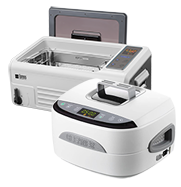
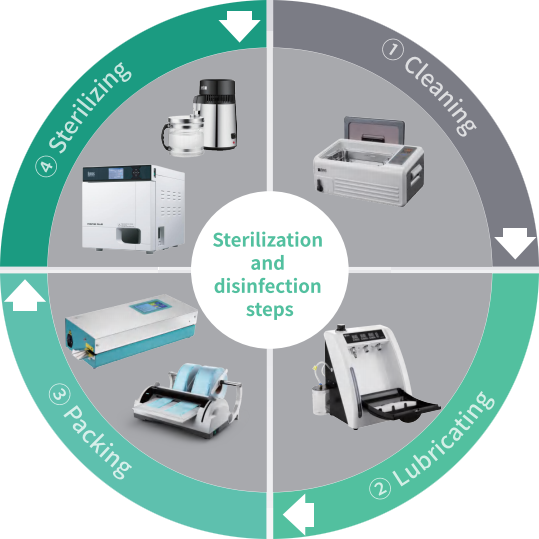
- Pre-clean instruments immediately after use. Dental tool sanitization begins at chairside, not in the sterilization room. Rinse instruments under running water, then place in an enzymatic soak or ultrasonic cleaner (Foclean-series or equivalent ultrasonic units work well here) for 5 to 10 minutes to remove bioburden.
- Rinse and dry thoroughly. After ultrasonic cleaning, rinse under distilled or purified water. Residual detergent or minerals can compromise the sterilization cycle and cause instrument corrosion over time.
- Inspect for visible soil. Any instrument with remaining visible debris must be re-cleaned before packaging. Never autoclave a visibly soiled instrument — the protein load will act as a shield against steam penetration.
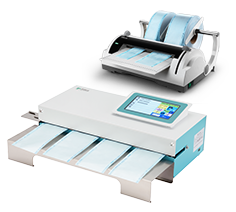
- Package instruments appropriately. Place instruments in sterilization pouches or wrap sets. Add a Class 5 chemical indicator inside each pack. Seal pouches using a validated heat sealer (Foseal-series or equivalent).
- Load the autoclave chamber correctly. Do not overload. Pouches should be placed on edge, not stacked flat. Hollow instruments (handpieces, suction tips) should face opening downward where possible to allow steam entry. Leave space between packs for steam circulation.
- Select the correct sterilization cycle. For wrapped loads and hollow instruments, use the Class B cycle (134°C, 4 minutes holding time minimum). For solid unwrapped instruments, a 121°C cycle with 15-minute holding time is acceptable.
- Run the cycle and monitor completion. Do not interrupt a running cycle. Wait for the full dry phase to complete — removing damp packs compromises the sterility barrier.
- Record the cycle in your sterilization log. Note the date, time, cycle type, temperature reached, operator name, and chemical indicator result. Store completed BI results alongside the log. This documentation is your compliance evidence during DOH inspections.
- Store sterilized packs appropriately. Keep sealed packs in a clean, dry, closed storage area. Sterility is event-related, not time-related — a pack stored properly remains sterile until the packaging is compromised.
Water quality: an overlooked variable
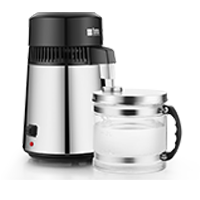
Using tap water in a benchtop autoclave is one of the fastest ways to damage the unit and compromise cycles. Mineral deposits (scale) accumulate on heating elements and chamber walls, reducing efficiency and creating hotspots that affect cycle validation. Use only distilled or deionized water — a small water distiller unit (FoVac-class or equivalent) alongside the autoclave makes this practical and cost-effective for daily clinic operations.
Common mistakes and how to avoid them
Why do so many clinics invest in quality equipment only to get inconsistent sterilization results? The answer is usually not the machine — it is the workflow around it.
Mistake 1: Using a Class N autoclave for handpieces
Gravity displacement (Class N) autoclaves cannot reliably remove air from hollow lumens. Steam simply does not penetrate the internal channels of a dental handpiece in a Class N cycle. This is not a minor technical distinction — it represents a genuine infection control failure. Any autoclave dental clinic setup where handpieces are recycled must use a Class B or validated Class S unit with confirmed hollow-load capability.
Mistake 2: Skipping the drying phase
Opening the autoclave door before the drying cycle completes leaves packs damp. A wet sterilization pouch is a compromised sterility barrier — moisture allows capillary migration of microorganisms through the packaging material. This turns a correctly run sterilization cycle into a liability. Allow full drying before retrieving packs, even if that means 15 to 20 additional minutes at the end of a busy session.
Mistake 3: Neglecting maintenance intervals
Door gaskets degrade. Water reservoir sensors drift. Pressure transducers lose calibration accuracy. A benchtop autoclave used for dental handpiece sterilization in a busy clinic runs three to five cycles per day — that is roughly 1,000 cycles per year. Without scheduled maintenance (gasket replacement every 500 cycles, annual calibration, descaling every 200 cycles or as manufacturer recommends), the unit will eventually run cycles that look complete on the display but no longer meet the actual temperature-time parameters required for validated sterility. Of course, in a low-volume practice, maintenance intervals may be less frequent — but they should still be tracked.
Mistake 4: Poor documentation habits
Sterilization logs are not bureaucratic busywork. They are traceability records that allow a clinic to identify, quarantine, and recall instruments if a cycle failure is detected after the fact. Without a log, a clinic faced with a failed BI test cannot determine which patients received instruments from which cycles — a scenario with serious liability implications. The investment in a printer-equipped autoclave unit pays back in the form of automated cycle records that satisfy this requirement with minimal staff effort.
Conclusion: making the right call for your clinic
Selecting the right autoclave dental clinic unit for a small Philippine practice comes down to four factors: classification (Class B for any practice using handpieces), chamber volume matched to actual daily throughput, compliance with DOH documentation requirements, and long-term serviceability in your local market. A well-chosen compact unit — properly maintained, correctly operated, and supported by a complete infection control dental clinic protocol — delivers the same patient safety outcomes as far larger hospital-grade equipment, at a fraction of the footprint and cost.
The goal is not the most expensive unit on the catalog. The goal is the right unit for your workload, running validated cycles every day, backed by a maintenance record that you can show any DOH inspector with confidence. In 2026, that standard is achievable for small clinics at every budget tier — the key is knowing which specifications to prioritize before you sign a purchase order.
Disclaimer: This article is intended for general informational purposes only and should not be considered a substitute for professional guidance, applicable regulatory requirements, or the manufacturer's instructions for use (IFU).
Frequently asked questions
Q: What size autoclave does a one-chair dental clinic in the Philippines need?
A: A 17- to 18-liter benchtop Class B autoclave is generally sufficient for a single-chair practice processing 15 to 25 instrument trays per day across two to three cycles. Choosing a unit larger than necessary increases operating costs without improving sterilization outcomes.
Q: Can a Class N autoclave be used for dental handpiece sterilization?
A: No. Class N (gravity displacement) autoclaves cannot reliably sterilize hollow-lumen instruments such as dental handpieces. Only Class B or validated Class S autoclaves with pre-vacuum systems are suitable for this purpose. Using a Class N unit for handpieces constitutes a cross-contamination prevention dentistry failure.
Q: How often should biological indicator (spore) tests be performed in a dental clinic?
A: Industry guidelines and DOH-aligned infection control standards recommend weekly biological indicator testing at minimum, plus testing after each maintenance event, autoclave repair, or any failed cycle. Results should be recorded in the sterilization log and retained for audit purposes.
Q: What water should be used in a benchtop autoclave?
A: Only distilled or deionized water should be used. Tap water and even filtered water contain minerals that cause scale buildup inside the chamber and on heating elements, degrading cycle performance and shortening equipment lifespan. A dedicated water distillation unit is a worthwhile investment for daily clinic operations.
Q: What documentation does a Philippine dental clinic need for DOH sterilization compliance?
A: Clinics are required to maintain a daily sterilization cycle log (date, time, cycle parameters, operator), chemical indicator results per pack, biological indicator records at the specified testing frequency, and evidence of staff training in dental instrument disinfection. Some units support automatic cycle printing, which simplifies this requirement significantly.
More

No.205 Guangyuan Road Jiangbei District Ningbo 315033 CHINA