Class N autoclave EN 13060 standard: compliance guide
Nov 20,2026


Article overview
This article explains the EN 13060 compliance framework for Class N autoclaves, covering technical definitions, load compatibility, validation protocols, and step-by-step guidance for dental clinics operating small steam sterilizers under current European standards.
Table of contents
- 1. What EN 13060 defines and why it matters
- 2. Class N autoclave: core technical definition
- 3. What loads a Class N autoclave can and cannot process
- 4. EN 13060 test cycles and validation requirements
- 5. Class N vs. Class B: choosing the right sterilizer for your setting
- 6. Practical compliance steps for dental clinics
- 7. Common mistakes when operating a Class N autoclave
- 8. Frequently asked questions
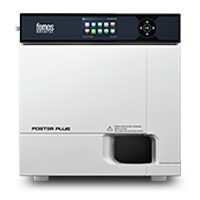
Meeting EN 13060 compliance is not merely a paperwork exercise — it directly determines whether your sterilization process is effective and legally defensible. Autoclav clasa n, or a Class N autoclave, is a gravity displacement steam sterilizer designed specifically for processing solid, unwrapped instruments. Under EN 13060, its permissible load types are strictly defined, and operating outside those boundaries voids validation entirely. For dental clinics in Romania and across the EU, understanding exactly where a Class N autoclave fits — and where it falls short — is the starting point for any responsible sterilization protocol.
What EN 13060 defines and why it matters
EN 13060 is the European harmonised standard governing small steam sterilizers — commonly called benchtop autoclaves — with a sterilization chamber volume not exceeding 60 litres. Published by the European Committee for Standardisation (CEN), it establishes performance requirements, test methods, and classification criteria that manufacturers and healthcare facilities must follow to demonstrate that a device reliably achieves sterility.
Why a harmonised standard changes everything
Before EN 13060 was widely adopted, dental clinics across Europe used sterilizers under a patchwork of national guidelines. The result was inconsistent cycle parameters, unclear load restrictions, and audit failures. EN 13060 resolved this by creating a single, testable framework. Any autoclave carrying CE marking based on this standard must have passed defined performance tests — not simply manufacturer declarations. That distinction matters enormously when a regulatory inspector reviews your sterilization records.
The standard divides small steam sterilizers into three classes — B, N, and S — each named to reflect the load types it can handle. Class B handles the broadest range, including porous loads and hollow instruments. Class S is configurable for specific loads as declared by the manufacturer. And Class N — the gravity displacement sterilizer — is the most restricted, yet also the most common entry-level device found in dental settings.
Scope of EN 13060 in the Romanian regulatory context
In Romania, dental clinics are subject to oversight from the Ministry of Health and must comply with EU Medical Device Regulation frameworks. EN 13060 is referenced in professional hygiene and disinfection guidelines applicable to dental practices. Failure to operate a sterilizer within its classified parameters can result in audit non-conformances and, in serious cases, suspension of clinical activity. Practical experience from facility audits shows that inspectors specifically check whether the class of autoclave matches the type of instruments being sterilised — a mismatch that Class N units frequently create when clinics use them beyond their intended scope.
Class N autoclave: core technical definition
Autoclav clasa n refers to a small steam sterilizer that uses gravity displacement — also called downward displacement — to remove air from the sterilization chamber. Rather than employing pre-vacuum or fractionated vacuum cycles, the unit relies on steam entering the chamber from the top and forcing cooler air downward and out through a drain port at the bottom.
The gravity displacement mechanism explained
Think of it like filling a glass with water from the top — the liquid displaces the air below, which exits from the bottom. In a Class N autoclave, saturated steam plays the role of the water. This mechanism is efficient and mechanically straightforward, which keeps unit costs lower and maintenance requirements simpler. However, it has a fundamental physical limitation: air that becomes trapped — inside hollow lumens, fabric folds, or porous packaging — cannot be fully displaced by gravity alone.
This limitation is precisely what EN 13060 encodes in the Class N classification. The standard does not penalise the technology; it simply defines the load types for which gravity displacement can reliably achieve a Sterility Assurance Level (SAL) of 10⁻⁶ — the internationally accepted benchmark for sterility in medical device processing.
Key technical parameters under EN 13060
A conforming Class N autoclave must demonstrate performance across the following test cycle parameters as defined in the standard:
| Parameter | EN 13060 Class N requirement |
|---|---|
| Sterilization temperature | 134 °C (primary cycle) or 121 °C |
| Holding time at 134 °C | Minimum 3 minutes |
| Air removal method | Gravity displacement (no pre-vacuum) |
| Permitted load types | Solid, unwrapped instruments only |
| Wrapped loads | Not permitted under Class N classification |
| Hollow instruments (Type A) | Not permitted |
| Porous loads | Not permitted |
| Chamber volume scope | Up to 60 litres |

What loads a Class N autoclave can and cannot process
The single most important practical question surrounding autoclav clasa n is: which instruments can it safely sterilize? Getting this wrong is not a technical nuance — it is a patient safety risk and a compliance failure.
Permitted loads: what Class N handles reliably
Class N autoclaves are validated to process solid, unwrapped instruments that have no internal channels or lumens. In a dental clinic, this typically includes:
- Solid metal instruments such as forceps, chisels, spatulas, and mixing instruments
- Stainless steel trays and instrument cassettes (open, not enclosed)
- Glass items with no enclosed cavities
- Solid plastic components rated for steam sterilization temperatures
These items allow steam to contact all surfaces directly, which is what gravity displacement achieves effectively. Because there are no pockets where residual air can hide, the SAL of 10⁻⁶ is reliably attainable.
Prohibited loads: where Class N creates compliance risk
This is where many dental clinics encounter problems — often unknowingly. The following load types must not be processed in a Class N autoclave under EN 13060:
- Hollow instruments Type A: dental handpieces, air-driven turbines, implant motors, and similar devices with long, narrow internal channels where steam cannot penetrate by gravity alone
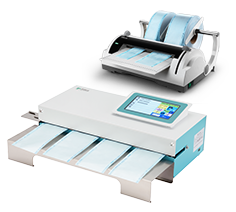
- Wrapped instruments: instruments sealed in sterilization pouches or textile wrapping, as packaging material creates air-trapping pockets
- Porous loads: gauze, bandages, or fabric-based materials
- Implant-grade or prion-risk instruments: items used in procedures with elevated infection risk, which require validated fractionated pre-vacuum cycles
Why do so many clinics miss this? Often because the autoclave physically accepts the load — it fits in the chamber, the cycle completes, and the printout shows a passed cycle. What the printout cannot confirm is whether steam reached every internal surface of a hollow instrument. That gap between apparent compliance and actual sterility assurance is precisely the risk that EN 13060 classification is designed to prevent.
"The classification of a sterilizer is not a marketing tier — it is a technical statement about which loads the device has been validated to sterilize reliably. Using a Class N autoclave for wrapped or hollow loads is a process failure, regardless of cycle completion indicators." — Consensus principle from EN 13060 application guidance in healthcare settings.
EN 13060 test cycles and validation requirements
Validation is the documented process that proves a sterilization cycle consistently delivers the required SAL under defined conditions. EN 13060 mandates specific test methods, and understanding them helps clinics interpret their maintenance obligations correctly.
Type testing vs. periodic requalification
EN 13060 distinguishes between type testing — conducted by the manufacturer to demonstrate product conformity — and periodic performance requalification, which is the clinic's ongoing responsibility. Type testing establishes that a given autoclave model is capable of meeting the standard under controlled laboratory conditions. Requalification confirms that your specific unit, in your specific environment, continues to perform within those parameters over time.
In practice, requalification for a Class N autoclave in a dental clinic typically involves:
- Routine daily process challenges using biological or chemical indicators
- Periodic thermometric testing to verify temperature distribution within the chamber
- Annual or semi-annual validation by an accredited service technician
- Maintenance of a cycle log recording temperature, pressure, time, and load type for every run
- Inspection of door seals, drain filters, and water quality (distilled water is mandatory)
The role of biological and chemical indicators
Chemical indicators provide immediate visual confirmation that a package has been exposed to sterilization conditions — but they do not confirm that microorganisms were actually destroyed. Biological indicators (BIs), typically containing Geobacillus stearothermophilus spores, provide the highest level of assurance by confirming actual lethality. For a Class N autoclave processing unwrapped solid instruments, daily chemical indicator checks combined with weekly BI testing represent a broadly accepted monitoring protocol, though local regulatory requirements in Romania may specify different frequencies. Always cross-reference with the applicable national healthcare hygiene guidelines.
Class N vs. Class B: choosing the right sterilizer for your setting
One of the most common decision points for dental clinics — particularly those upgrading or expanding — is whether a Class N autoclave is sufficient or whether a Class B steam sterilizer is necessary. The answer depends entirely on the instrument types in use.
What fundamentally separates Class N from Class B
Class B autoclaves employ fractionated pre-vacuum cycles: the chamber undergoes multiple alternating vacuum and steam pulses before the sterilization phase begins. This active air removal is what enables Class B devices to reliably sterilize wrapped instruments, porous loads, and hollow instruments including dental handpieces. Class N, without any vacuum capability, cannot replicate this performance regardless of cycle duration or temperature settings.
| Feature | Class N autoclave | Class B autoclave |
|---|---|---|
| Air removal method | Gravity displacement | Fractionated pre-vacuum |
| Solid unwrapped instruments | ✔ Permitted | ✔ Permitted |
| Wrapped instruments | ✘ Not permitted | ✔ Permitted |
| Dental handpieces (hollow Type A) | ✘ Not permitted | ✔ Permitted |
| Porous loads | ✘ Not permitted | ✔ Permitted |
| Prion risk instruments | ✘ Not recommended | Requires dedicated protocol |
| Typical unit complexity | Lower | Higher |
| Typical acquisition cost tier | Lower | Higher |
Which setting genuinely suits a Class N autoclave?
A Class N autoclave is appropriate in a dental setting only when the clinic can confirm that every instrument it processes is solid, unwrapped, and free of internal lumens — and that those instruments are used immediately after sterilization, not stored in sterile packaging for future use. This scenario is increasingly rare in modern dental practice, where wrapped sterile sets and handpiece sterilization are standard workflow components. Where it does apply — such as a secondary sterilization station for specific solid instruments only — a Class N unit remains a cost-effective and fully compliant choice within those strict boundaries.
Practical compliance steps for dental clinics
Achieving and maintaining EN 13060 compliance for a Class N autoclave in a dental clinic requires a structured approach. Compliance is not a one-time installation event — it is an ongoing operational discipline.
Step-by-step compliance framework
- Instrument audit: Document every instrument type processed in the autoclave and confirm each one falls within the permitted solid, unwrapped, non-hollow category. Any instrument that does not qualify must be redirected to an appropriately classified device.
- Water quality verification: Class N autoclaves require distilled or demineralised water with conductivity below the threshold specified in EN 13060 (typically ≤ 15 µS/cm). Using tap water accelerates scale buildup, compromises steam quality, and voids validation.
- Daily process monitoring: Run a test cycle with chemical indicators before the first clinical load. Record the result in the cycle log with date, operator initials, cycle parameters, and outcome.
- Weekly biological indicator testing: Place a BI in the most challenging position within the chamber (typically the bottom front, closest to the drain) and incubate the result according to the indicator manufacturer's instructions.
- Scheduled maintenance: Follow the manufacturer's maintenance schedule rigorously — door seal inspection, filter cleaning, chamber descaling, and safety valve testing. Deviations from the maintenance schedule create audit vulnerabilities.
- Annual validation: Engage a qualified service provider to perform formal performance requalification including thermometric mapping of the sterilization chamber, documentation of cycle parameters, and issuance of a validation report that can be presented during regulatory inspections.
Documentation: the evidence layer regulators examine
In Romanian dental clinic inspections, documentation is examined as closely as the equipment itself. Every cycle run on a Class N autoclave should generate a printout or electronic record showing time, temperature, pressure, and cycle type. These records must be retained for a minimum period as stipulated by applicable national health regulations — commonly a minimum of five years for sterilization records in medical settings. A well-maintained documentation trail is often the difference between a minor audit observation and a formal non-conformance. Of course, there are situations where older equipment does not generate automatic printouts — in such cases, manual log entries with the same parameters must be completed immediately after each cycle, without exception.
Common mistakes when operating a Class N autoclave
Real-world observation of dental clinic sterilization workflows reveals a consistent set of errors that compromise the value of an otherwise compliant autoclav clasa n setup. Identifying these patterns early prevents both patient safety incidents and regulatory findings.
Overloading and incorrect tray arrangement
Stacking instruments on top of each other or overloading trays creates areas where steam circulation is obstructed. Even with solid, unwrapped instruments, excessive density in the chamber can prevent uniform temperature distribution. The rule is straightforward: instruments should be arranged in a single layer, with space between items to allow free steam contact on all surfaces. An overcrowded chamber that shows a passed cycle on the display has not necessarily achieved uniform sterility throughout — the cycle indicator reflects chamber conditions at the sensor location, not at every instrument surface.
Assuming cycle completion equals sterility
This is perhaps the most widespread misconception in small clinic settings. A completed cycle with no alarm simply means the autoclave reached and held the set parameters at its measurement point. It does not confirm that every instrument in the load achieved equivalent conditions. This is exactly why biological indicator testing exists — to verify lethality, not just parameter achievement. Clinics that rely solely on cycle completion indicators without periodic BI testing are operating with an incomplete quality assurance system.
Skipping pre-cleaning before sterilization
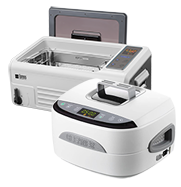
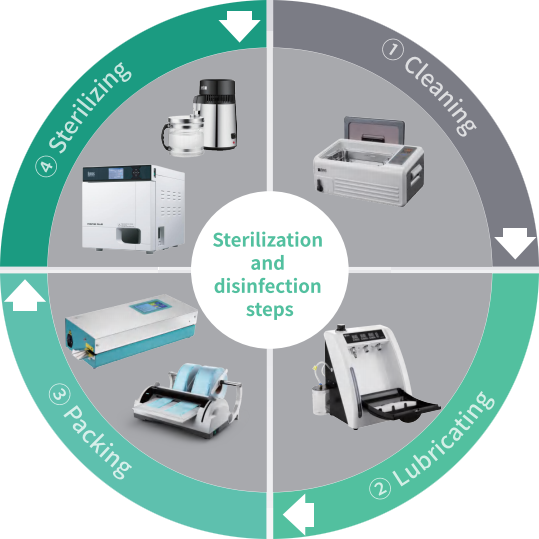
No sterilization process — Class N or otherwise — can reliably destroy microorganisms shielded by organic material such as blood, saliva, or tissue debris. Thorough pre-cleaning, ideally using an ultrasonic cleaner followed by rinsing and drying, is a prerequisite for effective sterilization. Skipping or rushing this step renders the entire autoclave cycle unreliable. The sterilization cycle is the final step in a decontamination sequence, not the whole process.
Using tap water or recycled condensate
Mineral deposits from hard water accumulate rapidly in the steam generator and chamber, degrading steam quality and creating hot and cold spots. Some clinics recycle the condensate water from the autoclave's own cycle — while this practice may appear economical, condensate can contain contaminants from instruments that compromise both water quality standards and long-term equipment performance. Use only fresh distilled or demineralised water from a verified source, and check conductivity regularly with a simple conductivity meter.
Frequently asked questions
Q: Can an autoclav clasa n be used to sterilize dental handpieces?
A: No. Dental handpieces are classified as hollow Type A instruments under EN 13060. Class N autoclaves use gravity displacement, which cannot reliably remove air from internal channels. Handpieces must be processed in a Class B steam sterilizer equipped with a fractionated pre-vacuum cycle. Using a Class N unit for handpieces constitutes a process failure under the standard.
Q: How often should a Class N autoclave be validated according to EN 13060?
A: EN 13060 requires initial installation qualification and ongoing performance requalification. In most dental clinic contexts, formal thermometric requalification is performed annually or after any significant event — such as relocation, major repair, or software update. Daily chemical indicator checks and periodic biological indicator tests provide ongoing process monitoring between formal validations.
Q: Is a Class N autoclave sufficient for a general dental practice in Romania?
A: It depends on the instrument mix used in the practice. If the clinic uses dental handpieces, implant motors, or routinely wraps instruments for storage before use, a Class N autoclave alone is insufficient. Modern general dental practices typically require at least a Class B steam sterilizer. A Class N unit may serve as a secondary device for specific solid-instrument sterilization within defined workflow boundaries.
Q: What water should be used in a Class N autoclave?
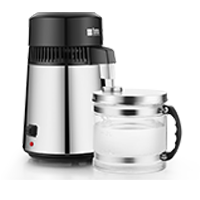
A: EN 13060 specifies the use of distilled or demineralised water with conductivity typically not exceeding 15 µS/cm. Using tap water introduces mineral scale, degrades steam quality, and may void the device's performance validation. Many facilities use a dedicated benchtop water distiller to ensure consistent supply of compliant water for their steam sterilizer.
Q: What is the difference between a Class N and Class S autoclave?
A: Class S autoclaves are designed for a specified range of loads as declared by the manufacturer — they may include some hollow or wrapped items depending on the specific product specification. Class N is strictly limited to solid, unwrapped instruments. Class S represents a middle ground, but the precise load compatibility must be confirmed against the specific manufacturer's declarations and validated test data for each device model.
Conclusion
The EN 13060 standard provides a clear and enforceable framework for understanding where autoclav clasa n fits within a dental sterilization workflow. Its gravity displacement mechanism makes it a reliable, low-complexity solution for solid, unwrapped instrument sterilization — but only within those strict boundaries. Clinics that use a Class N autoclave beyond its validated scope are not simply bending a guideline; they are creating an unverifiable gap in their sterility assurance chain. Matching the right sterilizer class to the actual instruments processed is the most fundamental compliance decision a dental practice can make. With proper load management, documented monitoring, correct water quality, and scheduled validation, a Class N autoclave operates as a fully compliant component of a broader sterilization medical equipment strategy. For practices with more complex instrument sets, the step up to a Class B steam sterilizer is not optional — it is a clinical and regulatory necessity.
Disclaimer: This article is intended for general informational purposes only and should not be considered a substitute for professional guidance, applicable regulatory requirements, or the manufacturer's instructions for use (IFU).
Disclaimer: This article is based on publicly available information from external sources. It is provided for general informational purposes only. Readers are encouraged to consult the original sources and verify the information independently.
More

No.205 Guangyuan Road Jiangbei District Ningbo 315033 CHINA