How to validate a Class B autoclave: step-by-step guide
Nov 19,2026


Article overview
This guide explains how to validate a Class B autoclave from initial installation through to periodic requalification. It covers EN 13060 test requirements, documentation obligations, and practical troubleshooting advice relevant to dental clinics and medical facilities operating under EU regulatory frameworks — including those based in Romania.
Table of contents
- 1. What is a Class B autoclave and why does validation matter?
- 2. Regulatory framework: EN 13060 and EU compliance requirements
- 3. Pre-validation preparation: equipment and documentation checklist
- 4. Step-by-step validation process for a Class B autoclave
- 5. Performance qualification: test types and acceptance criteria
- 6. Ongoing maintenance and revalidation protocols
- 7. Common validation failures and how to avoid them
- 8. Frequently asked questions
What is a Class B autoclave and why does validation matter?
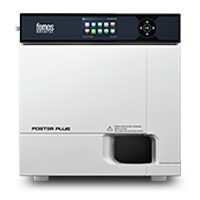
An autoclav clasa b — or Class B autoclave — is a small steam sterilizer that uses a full pre-vacuum cycle to remove air from the chamber before steam penetration, enabling reliable sterilization of wrapped instruments, hollow loads, and porous materials. Unlike Class N or Class S units, the Class B sterilizer achieves the most demanding sterilization performance among benchtop autoclaves, making it the standard of choice in dental clinics and surgical environments across the EU.
Validation is not optional. It is the formal, documented process that proves your autoclave consistently performs as intended under real operating conditions. Without a completed validation file, a dental clinic in Romania cannot demonstrate regulatory compliance to inspection authorities, insurers, or accreditation bodies. Think of it like a clinical trial for your sterilization unit — just as a drug must be proven effective before use, a steam sterilizer must be proven reliable before it touches a single surgical instrument.
Why Class B specifically requires validation
The complexity of a pre-vacuum autoclave cycle introduces more variables than a simple gravity-displacement sterilizer. Temperature uniformity across porous loads, dryness of the final pack, and air removal efficiency all require verified measurement. The EN 13060 standard addresses each of these variables through a structured qualification sequence. For dental autoclave units, validation is typically required at installation, after any significant repair, and at regular intervals — annually in most EU member-state guidelines.
Who is responsible for validation?
Responsibility sits with the facility operator, not the manufacturer. The manufacturer provides technical documentation and installation parameters, but the clinic or practice must commission a qualified service technician or validation specialist to execute and sign off the full qualification process. This is a critical distinction that many small dental practices overlook when purchasing a new benchtop autoclave.
Regulatory framework: EN 13060 and EU compliance requirements
The primary standard governing small steam sterilizers in Europe is EN 13060, which defines the performance requirements, test methods, and classification criteria for benchtop autoclave units used in healthcare settings. Any autoclav clasa b sold and operated within the EU must conform to this standard, and validation activities must be designed to satisfy its requirements.
Key EN 13060 requirements at a glance
| Test / requirement | Class B autoclave | Conventional gravity sterilizer |
|---|---|---|
| Air removal method | Fractionated pre-vacuum | Gravity displacement only |
| Wrapped instrument loads | Required to handle | Not reliably achieved |
| Hollow load sterilization (Type B) | Fully supported | Not supported |
| Dryness test requirement | Mandatory | Not applicable |
| Bowie-Dick / air removal test | Required daily | Not required |
| Sterilization pouch compatibility | Full support | Limited / unreliable |
Beyond EN 13060, Romanian dental facilities must also comply with national health authority directives and the EU Medical Device Regulation (MDR 2017/745) framework where applicable. Validation records may be requested during routine inspections by the Ministry of Health or equivalent regional bodies.
The role of CE marking in validation
CE marking on a dental autoclave confirms the device meets essential safety and performance requirements under EU directives. However — and this is a point frequently misunderstood — CE marking does not replace site-specific validation. It confirms the product design is compliant; validation confirms the installed unit performs correctly in your specific facility, with your specific load configurations.
Pre-validation preparation: equipment and documentation checklist
Attempting validation without thorough preparation is one of the most common reasons clinics face repeated test failures or incomplete compliance files. Before a single test cycle runs, several prerequisites must be confirmed.
Equipment and utilities verification
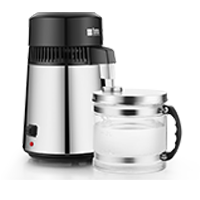
The autoclave installation site must meet the manufacturer's utility specifications. This includes verified water supply quality — Class B sterilizers require distilled or Type 2 purified water, not tap water. Using standard tap water accelerates scale buildup, compromises steam quality, and will cause failures in dryness and steam purity tests during validation. A conductivity reading of the water supply should be documented and kept below the threshold specified in EN 13060 (typically ≤15 µS/cm).
Electrical supply stability, ventilation adequacy, and horizontal leveling of the benchtop autoclave unit should also be formally recorded as part of installation qualification. Instrumentation used during validation — thermocouples, data loggers, pressure transducers — must carry current calibration certificates traceable to national measurement standards.
Documentation package required before testing begins
- Manufacturer's installation and operation manual (IFU)
- Equipment specification sheet confirming EN 13060 compliance
- Calibration certificates for all measurement instruments
- Water quality test report
- Site utility check record (electrical, ventilation, drainage)
- Operator training records
- Validation protocol document — written before testing, not after
Writing the validation protocol after the tests are run is a significant compliance failure. The protocol must define in advance: which tests will be performed, the acceptance criteria for each, the load configurations to be tested, and who is responsible for execution and review. This is not a bureaucratic formality — it is the backbone of a defensible compliance file.

Step-by-step validation process for a Class B autoclave
Autoclave validation follows a three-phase qualification structure that is well established in EN 13060 and aligned with international medical device sterilization standards. Each phase builds on the previous one, and none can be skipped.
- Installation Qualification (IQ) — Confirm the autoclave is installed according to manufacturer specifications and that all utilities meet stated requirements.
- Operational Qualification (OQ) — Verify that the autoclave cycle parameters (temperature, pressure, time) are achieved consistently when operating empty or with a standard reference load.
- Performance Qualification (PQ) — Demonstrate that the sterilization cycle delivers adequate lethality across all defined load types under routine operating conditions.
Phase 1: installation qualification in practice
During IQ, the validation specialist physically verifies and records every installation parameter against the manufacturer's specifications. Serial numbers, software versions, chamber dimensions, and utility connections are all documented. Any deviation from the specified installation conditions must be resolved before OQ begins. Actual testing experience shows that roughly 20–30% of IQ inspections uncover at least one utility deviation — most commonly inadequate water purity or insufficient ventilation clearance around the unit.
Phase 2: operational qualification
OQ tests the autoclave cycle in a controlled, repeatable manner. Thermocouples placed at defined positions inside the empty chamber measure temperature distribution throughout the entire cycle — including the pre-vacuum stage, sterilization hold, and drying phase. The cycle must achieve 134°C (or 121°C for the lower-temperature cycle) within the specified tolerance (typically ±2°C) and maintain it for the full hold time defined by the cycle program.
At least three consecutive cycles must pass OQ testing before the qualification advances to PQ. Why three? Because one successful run can be coincidental; three consecutive passing runs establish a statistically meaningful baseline of cycle consistency.
Phase 3: performance qualification with real loads
PQ repeats the temperature mapping and lethality measurements with actual load configurations — the wrapped surgical instruments, hollow dental handpieces in sterilization pouches, and porous textile packs that the clinic uses in day-to-day practice. Each load type defined in the clinic's sterilization procedure must be tested separately. This is where real-world conditions are introduced, and it is the most demanding phase of the entire validation sequence.
"The purpose of sterilization validation is not to generate paperwork — it is to provide objective, documented evidence that the process reliably eliminates viable microorganisms from every item in the sterilized load, every time the cycle runs." — Paraphrased from EN ISO 17665 guiding principles on moist heat sterilization of healthcare products.
Performance qualification: test types and acceptance criteria
Several specific tests must be executed as part of a complete PQ for an autoclav clasa b. Each targets a different aspect of sterilization performance, and all must be passed before the validation can be declared complete.
Air removal and Bowie-Dick test
The Bowie-Dick test — or an equivalent air-removal test — verifies that the pre-vacuum system effectively removes air from the chamber before steam admission. Air pockets prevent steam from reaching instrument surfaces and are the primary cause of sterilization failures in vacuum sterilizers. The test uses a standardized test pack containing a chemical indicator sheet; uniform color change across the entire sheet confirms adequate air removal. This test must be run at the start of each working day on a Class B sterilizer, but during validation it must also be formally documented as part of the PQ record.
Temperature distribution and steam penetration tests
Using calibrated thermocouples or wireless data loggers, the validation team maps temperature at multiple points within the loaded chamber. EN 13060 requires that all measurement points reach and maintain the sterilization temperature within the specified tolerance throughout the hold time. For a 134°C/4-minute cycle, every thermocouple must read between 134°C and 137°C for the full four minutes. Even a single data point falling below 134°C constitutes a test failure and triggers investigation.
Steam penetration testing uses a small steam penetration test device — a hollow aluminum body with a thermocouple in the geometric centre — to confirm that steam reaches the core of a narrow-lumen load. This is especially relevant for dental handpiece sterilization, where internal channels must be penetrated.
Dryness test and biological indicator confirmation
After the drying phase, wrapped packs must meet a dryness acceptance limit — typically no more than 1% moisture increase by weight for wrapped solid loads, with stricter limits for porous loads. Wet packs compromise packaging integrity and risk post-sterilization contamination during storage.
Biological indicators (BIs) using Geobacillus stearothermophilus spore strips may be incorporated into PQ as a direct measure of sterilization efficacy. A positive BI result after a completed cycle is a critical failure. Of course, there are circumstances where BIs alone are insufficient — they confirm lethality at the BI location but do not replace physical parameter monitoring as evidence of a valid cycle.
Ongoing maintenance and revalidation protocols
Validation is not a one-time event. A Class B sterilizer must be revalidated whenever circumstances change and must undergo periodic requalification even when no changes are apparent.
Triggers for immediate revalidation
- Replacement of any critical component (door seal, vacuum pump, heating element, control board)
- Relocation of the autoclave to a different room or facility
- Change in load type, packaging system, or sterilization pouch specification
- Addition of a new cycle program not covered in the original validation
- Any sterilization failure event or unresolved process deviation
- Software or firmware update that affects cycle parameters
Routine periodic requalification schedule
In the absence of change events, most EU regulatory guidance recommends annual requalification of dental autoclaves — and many national authorities, including those in Romania, have adopted this as a minimum standard. Annual requalification should include at minimum a repeat of the OQ temperature distribution tests and documentation of water quality, maintenance history, and instrument calibration status. Some facilities opt for a six-month interim check, particularly in high-throughput environments where the autoclave runs multiple cycles daily.
Autoclave maintenance between validation events is equally important. Regular descaling, door gasket inspection, vacuum pump servicing, and filter replacement according to the manufacturer's schedule directly affect the reproducibility of cycle performance. A well-maintained class B sterilizer is far more likely to pass revalidation on the first attempt than one that has accumulated deferred maintenance items.
Common validation failures and how to avoid them
Understanding where validations most frequently fail helps dental practices and their validation partners design better protocols and avoid costly repeat testing. The following failure patterns appear consistently in real-world dental autoclave qualification projects.
Temperature non-uniformity within the loaded chamber
This is the single most common PQ failure. It is almost always traced to overloading — placing too many instruments or pouches in the chamber, stacking items in a way that blocks steam circulation, or using non-validated load configurations. The fix is straightforward but requires discipline: load configurations must be standardized, formally defined, and trained into daily practice. Any configuration that was not tested during validation must not be used in routine operation.
Inadequate water quality
Using mains water instead of distilled water is a surprisingly frequent finding. The resulting scale deposits on heating elements and chamber walls reduce heat transfer efficiency, alter steam quality, and trigger false cycle failures. Regular water quality checks using a conductivity meter take under two minutes and prevent the far more expensive consequence of a failed validation cycle or a blocked steam generator.
Incomplete or retrospective documentation
Validation files assembled after the fact — where test results have been recorded but the original protocol was written post-testing, or where calibration certificates are missing — do not meet regulatory requirements. Inspection authorities can and do reject retrospective documentation. Proper validation requires prospective protocol approval before testing begins. This is non-negotiable.
Prion sterilization considerations
Standard Class B steam sterilization cycles at 134°C are considered effective against most pathogens, including bacterial spores. However, prion sterilization presents a distinct challenge — conventional steam cycles do not reliably inactivate prion proteins. For instruments with known or suspected prion exposure, national health authority guidelines must be consulted, as additional decontamination steps beyond standard autoclave cycles may be required.
Frequently asked questions
Q: How often does a Class B autoclave need to be revalidated?
A: Most EU regulatory frameworks, including guidelines applicable in Romania, require annual revalidation as a minimum. Revalidation must also occur immediately after any significant repair, component replacement, relocation, or change in load type or packaging. High-volume dental practices may benefit from a six-month interim qualification review.
Q: What is the difference between IQ, OQ, and PQ in autoclave validation?
A: Installation Qualification (IQ) verifies correct installation against manufacturer specifications. Operational Qualification (OQ) confirms that the autoclave achieves its defined cycle parameters consistently under empty or reference load conditions. Performance Qualification (PQ) proves the cycle delivers adequate sterilization across all load types used in routine clinical practice. All three phases are required for a complete validation file.
Q: Can a dental clinic perform autoclave validation internally without an external specialist?
A: In principle, validation can be performed by a suitably trained and equipped person. In practice, most dental clinics lack the calibrated instrumentation and technical expertise required. External validation specialists bring traceable calibration certificates, standardized test equipment, and the procedural knowledge to produce a documentation package that will satisfy regulatory inspection. Using a qualified specialist is strongly recommended.
Q: What water type should be used in an autoclav clasa b?
A: Class B autoclaves require distilled or demineralized water meeting a conductivity level typically below 15 µS/cm, as specified in EN 13060. Tap water contains dissolved minerals that cause scale buildup on heating elements and chamber surfaces, degrading steam quality and shortening component life. Using correct water quality is both a maintenance requirement and a validation precondition.
Q: Where can I find the technical standard for Class B autoclave sterilization?
A: The governing standard is EN 13060, published by CEN (European Committee for Standardization). Dental practices can also consult the national standards body in Romania (ASRO) for the locally adopted version of the standard. For a broader technical overview of the steam sterilization process, the class b autoclave sterilization reference provides useful foundational information.
Conclusion
Validating an autoclav clasa b is a structured, evidence-based process that protects both patients and practitioners. From the initial installation check through operational testing and real-load performance qualification, each phase generates objective data confirming that your steam sterilizer performs as required by EN 13060. The documentation produced is not simply a regulatory formality — it is a clinical risk management tool that demonstrates your commitment to consistent, verifiable sterilization outcomes. Medical sterilization equipment that has been properly validated and maintained gives any dental practice the confidence that every instrument leaving the autoclave cycle is safe for clinical use. For facilities in Romania and across the EU, investing the time and resources to do this correctly from the outset is always the more cost-effective path compared to managing failed inspections or, far more seriously, sterilization-related adverse events.
Disclaimer: This article is intended for general informational purposes only and should not be considered a substitute for professional guidance, applicable regulatory requirements, or the manufacturer's instructions for use (IFU).
Disclaimer: This article is based on publicly available information from external sources. It is provided for general informational purposes only. Readers are encouraged to consult the original sources and verify the information independently.
More

No.205 Guangyuan Road Jiangbei District Ningbo 315033 CHINA