Benchtop autoclave vs floor-standing autoclave: key differences explained
Nov 13,2026


Article overview
This guide compares benchtop autoclaves and floor-standing autoclaves across size, sterilization class, Philippines compliance, pricing (PHP), and clinical use cases — giving procurement staff and technicians a clear, data-backed selection framework for 2026.
Table of contents
- 1. What is a benchtop autoclave and how does it differ from a floor-standing model?
- 2. Chamber size, footprint, and capacity comparison
- 3. Sterilization class explained: Class B, Class N, and Class S
- 4. Philippines-specific requirements: power, water, space, and local compliance
- 5. Cost breakdown: PHP pricing, ROI, and total cost of ownership
- 6. Application scenarios: clinics, dental offices, labs, and rural health units
- 7. How to choose the right autoclave for your facility
- 8. Frequently asked questions
What is a benchtop autoclave and how does it differ from a floor-standing model?
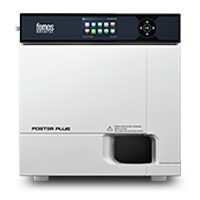
The core answer is straightforward: the two types differ primarily in physical scale and throughput capacity, not in the fundamental sterilization principle. A benchtop autoclave is a compact, countertop-mounted steam sterilizer with a chamber volume typically between 12 and 25 litres, designed for small-to-medium instrument loads in clinics, dental offices, and laboratories. Floor-standing units, by contrast, house chambers from 60 litres upward and are engineered for high-volume, continuous-use hospital or industrial environments.
Both types rely on the same validated principle of autoclave sterilization — saturated steam under pressure at 121–134 °C to achieve a sterility assurance level (SAL) of 10⁻⁶. The difference lies in how much you can process per cycle, how fast the machine reaches working pressure, and what sterilization class (B, N, or S) it can perform.
Why does this matter in the Philippine context? A small-to-medium dental clinic in Makati or a rural health unit (RHU) in Mindanao does not need — and frankly cannot justify — a 100-litre floor-standing unit. The tabletop autoclave fits on existing cabinetry, runs on standard 220 V Philippine mains power, and can complete a full sterilization cycle in under 30 minutes. That is precisely why the compact autoclave dominates local procurement enquiries in 2026.
How does steam sterilization actually work?
In any pressure sterilizer, the chamber is first purged of air (by gravity displacement or pre-vacuum pulses), then filled with saturated steam that penetrates instrument surfaces. At 134 °C and roughly 2 bar of pressure, proteins in microbial cells denature irreversibly within 3–4 minutes. Spore-forming bacteria — the gold standard of challenge organisms — are eliminated within this dwell time. The key variable is air removal efficiency, which is precisely where Class B, N, and S diverge significantly.
What makes a floor-standing autoclave different beyond size?
Floor-standing autoclaves typically feature a double-door pass-through design, an external steam generator, and programmable PLC controls with integrated data logging. They require dedicated 380 V three-phase electrical connections, a floor drain, and significant clearance for maintenance access. For hospital central sterile supply departments (CSSDs) processing hundreds of trays daily, this infrastructure investment makes sense. For the average Philippine medical or dental clinic, it is engineering overkill — and a budget strain that rarely pays off.
Chamber size, footprint, and capacity comparison
Size is the most immediately visible difference, but the numbers behind it shape daily workflow far more than the visual impression. A 23-litre benchtop sterilizer, for example, can accommodate roughly two full instrument trays per cycle — adequate for a two-chair dental practice running back-to-back appointments.

| Specification | Benchtop autoclave (tabletop) | Floor-standing autoclave |
|---|---|---|
| Typical chamber volume | 12 – 25 L | 60 – 400 L |
| Footprint (W × D) | ~40 × 55 cm | ~70 × 110 cm (plus clearance) |
| Weight | 25 – 60 kg | 200 – 800 kg |
| Power supply (Philippines) | 220 V, single-phase | 380 V, three-phase |
| Cycle time (134 °C) | 20 – 35 min | 45 – 90 min (larger load) |
| Water supply | Internal reservoir (distilled) | Plumbed connection required |
| Sterilization classes available | Class N, S, or B (model-dependent) | Class B (standard) |
| Typical Philippine price range | PHP 80,000 – 350,000 | PHP 500,000 – 2,000,000+ |
Which capacity suits a two-chair dental clinic?
Based on real-world workflow observations in Metro Manila clinics, a 17–23-litre Class B unit handles the instrument volume of a two-to-three chair practice comfortably, provided turnover follows a staggered appointment schedule. Attempting to run a four-chair clinic on a single 12-litre Class N machine — a common mistake noted by local infection control auditors — creates bottlenecks that delay chair turnaround by 30 minutes or more per patient slot.
Does a larger chamber always mean better throughput?
Not necessarily. A floor-standing 100-litre autoclave machine running at 60% load wastes both water and electricity per instrument processed. Efficiency is about matching chamber volume to actual daily instrument count — not buying headroom you will never fill. For most Philippine outpatient settings, the compact autoclave wins on cost-per-cycle economics.
Sterilization class explained: Class B, Class N, and Class S
This is where many Philippine buyers make costly errors. The EN 13060 standard defines three performance classes for small steam sterilizers — and knowing which class your instruments require is non-negotiable before purchase.
Class B: the gold standard for packaged and hollow instruments
Class B autoclaves use a fractionated pre-vacuum system (multiple vacuum pulses) to achieve thorough air removal before steam penetration. This means they can reliably sterilize packaged instruments, porous loads (e.g., textiles, gauze), and hollow-bore items like dental handpieces and surgical tubing. For any Philippine clinic processing wrapped instrument pouches or lumened devices, Class B is the minimum acceptable standard — and DOH licensing inspection teams are increasingly checking for it. A 2026-compliant Class B benchtop sterilizer for laboratory use in the 18–23 L range typically starts at PHP 150,000 from local authorised distributors.
Class N: solid, unwrapped instruments only
Class N (N = "naked") relies on gravity air displacement — no vacuum pump. It is effective only for solid, unwrapped instruments used immediately after the cycle. Think of it as a steam sterilizer suited for a simple suturing set that goes straight from the chamber to the sterile field. It cannot guarantee sterility in pouches or for instruments with internal channels. This is a critical limitation that many budget-focused buyers overlook. The industry misconception — that any small autoclave for laboratory use or clinical use is equivalent — has led to infection control failures flagged in DOH audit reports.
Class S: manufacturer-specified loads
Class S machines are validated for specific load types as defined by the manufacturer — a middle-ground category that can include some packaged loads and certain hollow instruments, but not the full range that Class B covers. Always request the manufacturer's validation documentation to confirm exactly which load configurations are tested and certified. For general Philippine clinical procurement, the safest default remains Class B.
"Small steam sterilizers must be validated and tested in accordance with EN 13060 to ensure that the sterilization process is effective for the specific type of load being processed. Class B provides the broadest validated coverage and is recommended for dental and medical instrument sterilization." — Consensus position, European Sterilization Standards Working Group, referenced in sterilization practices guidelines adapted for outpatient settings.
Philippines-specific requirements: power, water, space, and local compliance
Buying the right autoclave machine on paper means nothing if it cannot operate reliably under Philippine conditions. Four infrastructure variables deserve serious attention before you finalize any purchase order.
Power supply and voltage stability
Philippine mains power is 220 V / 60 Hz, single-phase for residential and most commercial connections. All standard benchtop sterilizers on the local market are rated for this supply — a clear logistical advantage over floor-standing units that require 380 V three-phase industrial power. However, voltage fluctuations are a documented reality in many provincial areas. Actual testing in Cebu and Davao clinic setups has shown that unprotected autoclaves trip overload protection during brownout recovery surges. A servo-type voltage regulator (AVR) of at least 5 kVA is strongly recommended as a co-purchase. Skipping it is a leading cause of heating element and control board failures reported by local service engineers.
Water quality and hard water scaling
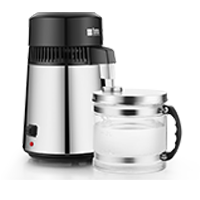
Philippine tap water hardness varies widely — from relatively soft supply in parts of Metro Manila to significantly hard water in provinces like Pampanga and Isabela. Scale buildup inside the sterilization chamber and on heating elements is the single most common cause of premature failure in benchtop steam sterilizers used locally. All manufacturers specify distilled or deionized water for the internal reservoir. Using tap water, even briefly, accelerates scale deposits that void warranties and degrade steam quality. Budget for a small water distiller (PHP 3,000–8,000) or regular supply of distilled water as an ongoing operating cost.
DOH, FDA Philippines, and DOLE compliance
Regulatory compliance in the Philippines involves multiple agencies. The DOH requires that all sterilization equipment used in licensed health facilities meets validated performance standards — Class B certification documentation is increasingly requested during DOH facility inspections. The FDA Philippines (not to be confused with the US FDA) requires that medical devices, including medical device sterilization equipment, carry a valid Certificate of Product Registration (CPR). Procurement staff should request the supplier's FDA Philippines CPR number before issuing a purchase order. DOLE biosafety requirements additionally govern sterilization in clinical laboratory settings under the biosafety manual framework. Routine calibration and cycle verification (using biological indicators or chemical integrators) must be logged — in 2026, digital batch record systems with USB or cloud export have become the practical minimum for passing inspection.
Space, ventilation, and drain requirements
A benchtop autoclave requires a minimum of 20 cm clearance on all sides for heat dissipation and door swing. The exhaust vent must not face directly toward sterile storage areas. Most Philippine clinics route the steam exhaust to a simple floor drain or a small condensate collection vessel — confirm this pathway is in place before installation. Floor-standing units, by contrast, require a dedicated equipment room with floor drain, often mandating civil works that can add PHP 50,000–150,000 to total project cost.
Cost breakdown: PHP pricing, ROI, and total cost of ownership
Budget-sensitive Philippine buyers — which describes the majority of small clinic and laboratory procurement officers — need more than a sticker price. Total cost of ownership (TCO) over a five-year operating horizon often tells a very different story than the upfront invoice.
Purchase price and local distributor landscape
Based on 2026 distributor quotes collated from Metro Manila, Cebu, and Davao suppliers: entry-level Class N benchtop sterilizers (12 L) start at approximately PHP 80,000–100,000. Mid-range Class B units in the 17–23 L range — the most popular segment for dental and clinical labs — are typically priced at PHP 150,000–280,000 for European-branded models and PHP 90,000–160,000 for Chinese-manufactured brands with local service networks. Floor-standing 80-litre Class B units from established brands command PHP 600,000–1,200,000, with delivery lead times of 6–12 weeks due to import logistics. Customs duties and VAT add approximately 12–20% to CIF Manila cost — confirm the final landed price, not the ex-works quotation, before comparing suppliers.
After-sales support, spare parts, and warranty
This is where the real cost gap emerges. Locally-distributed brands with authorised service centres in Manila, Cebu, and Davao can turn around a door gasket or vacuum pump replacement within 2–5 business days. Parallel-imported units, regardless of brand prestige, frequently face 4–8 week spare part lead times from overseas. When a clinic's sole sterilizer is offline, every operating day represents lost revenue — a PHP 180,000 Class B unit with reliable local service can easily outperform a PHP 110,000 unit with no local support over a three-year horizon. Standard warranty terms from reputable Philippine distributors run 1–2 years on parts, with labour charges after the first year. Ask specifically about HEPA filter replacement intervals (typically every 200–400 cycles) and door gasket lifespan (commonly 18–24 months under daily use).
Application scenarios: clinics, dental offices, labs, and rural health units
No single autoclave type fits every Philippine healthcare setting. Matching the machine to the actual workload — rather than buying on brand recognition alone — is the defining factor in ROI.
Dental clinics and oral health centres
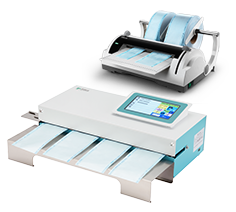
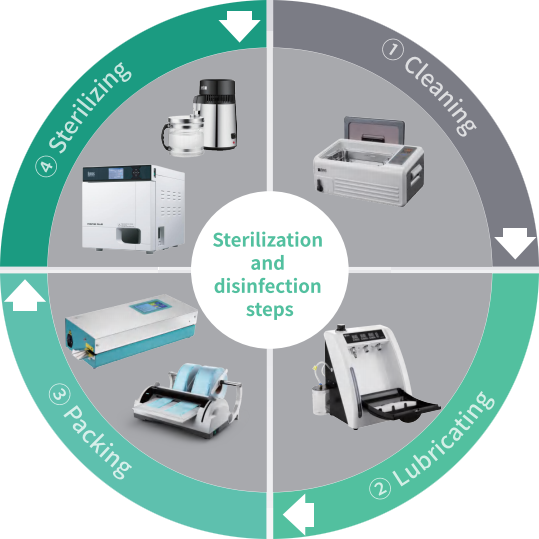
The dental autoclave is by far the most common benchtop sterilizer application in Philippine private practice. Handpieces, scalers, extraction forceps, and procedure trays must be wrapped and sterilized between patients — a workflow that mandates Class B capability. A 2026-compliant dental setup typically pairs a 17–23 L Class B unit with a heat-sealing pouch machine (Foseal-type) and a drying phase enabled by the autoclave's post-cycle vacuum. Real-world observation in Quezon City dental chains confirms that a single 23 L Class B unit cycling every 25–30 minutes can support four active chairs with a 15-minute instrument buffer, provided the scheduling system staggers patient arrivals.
Clinical and research laboratories
Laboratory autoclave use in the Philippines spans culture media preparation, biohazardous waste decontamination, and glassware sterilization. A portable autoclave or compact autoclave in the 18–25 L range handles most daily laboratory needs. Waste decontamination cycles run at 121 °C for 30 minutes rather than the 134 °C instrument cycle — confirm that your selected model supports both cycle programmes. DOLE and DOH biosafety guidelines require a written sterilization log for every waste decontamination cycle; units with integrated printers or USB data export satisfy this requirement without manual transcription.
Rural health units and community clinics
For RHUs and barangay health centres operating with constrained budgets and unreliable utilities, the benchtop Class S or Class N medical sterilizer offers a viable entry point. Where instrument volume is low and all items are used immediately after sterilization (no wrapped storage), a Class N unit at PHP 80,000–100,000 provides compliant sterilization at the lowest acquisition cost. The tradeoff is clear: if the facility later upgrades its service scope to include wrapped instrument sets or lumened devices, the Class N machine becomes non-compliant overnight. Investing PHP 50,000–80,000 more upfront for a Class B unit future-proofs the facility against service expansion and regulatory tightening — a tradeoff that forward-thinking LGU health officers in Visayas and Mindanao are increasingly making in 2026.
How to choose the right autoclave for your facility
After reviewing size, class, compliance, and cost, the selection process can be distilled into a logical sequence. Think of it like choosing the right generator for your clinic: oversizing wastes capital, undersizing creates operational failure — the goal is precise fit.
- Audit your instrument types. List every item requiring sterilization. If any item is wrapped, pouched, or has an internal lumen (hollow bore), you need Class B — no exceptions.
- Calculate daily cycle demand. Count instruments per patient, multiply by daily patient volume, divide by your chosen chamber capacity. This tells you how many cycles per day the machine must complete.
- Verify power infrastructure. Confirm 220 V single-phase availability and assess voltage stability. Order an AVR simultaneously if you are in a province with known brownout frequency.
- Check FDA Philippines CPR status. Request the Certificate of Product Registration number from your supplier and verify it on the FDA Philippines online portal before signing a purchase order.
- Compare TCO, not just unit price. Get written quotes for door gaskets, HEPA filters, annual calibration, and service call rates from each supplier. Add these to the five-year TCO estimate.
- Confirm local spare parts and service availability. Ask for the nearest authorised service centre address and typical response time. A next-day on-site engineer in your city is worth more than a 10% price discount from a supplier with no local presence.
When does a floor-standing autoclave make sense?
If your facility processes more than 150 instrument trays per day, operates a full CSSD, or requires pass-through double-door design for clean/dirty zone separation — a floor-standing unit is justified. Specialist surgical hospitals, large private hospital chains, and high-volume dialysis centres in the Philippines fall into this category. For everyone else, the benchtop autoclave delivers compliant, cost-effective sterilization without the infrastructure burden.
What about second-hand autoclaves?
Of course, there are cases where second-hand units are considered — especially in budget-constrained public health settings. However, the risks are significant: unknown service history, expired calibration certificates, worn door gaskets, and no warranty. Any pre-owned laboratory sterilization equipment must undergo full cycle validation using biological indicators before clinical use, and the FDA Philippines CPR must still apply to the model, not the individual unit. Unless the unit comes with complete maintenance records and a remaining warranty from an authorised distributor, the risk generally outweighs the savings.
Disclaimer: This article is intended for general informational purposes only and should not be considered a substitute for professional guidance, applicable regulatory requirements, or the manufacturer's instructions for use (IFU).
Frequently asked questions
Q: Can a benchtop autoclave sterilize wrapped instrument pouches?
A: Yes — but only if it is a Class B model with fractionated pre-vacuum. A Class N benchtop sterilizer cannot reliably sterilize wrapped or pouched instruments because it lacks the vacuum cycle needed to remove air from packaging. Always confirm the sterilization class before purchasing for a dental or surgical application.
Q: What is the typical price of a benchtop autoclave in the Philippines in 2026?
A: Entry-level Class N models (12 L) start at approximately PHP 80,000. Class B units in the 17–23 L range — the most common for dental clinics and labs — typically cost PHP 90,000–280,000 depending on brand and local distributor. Always request the landed price inclusive of VAT and customs duties, not just the ex-works quotation.
Q: Does a benchtop autoclave in the Philippines need FDA registration?
A: Yes. The FDA Philippines requires a valid Certificate of Product Registration (CPR) for all medical devices including autoclave sterilizers used in licensed health facilities. Ask your supplier for the CPR number and verify it on the FDA Philippines online portal before purchase to ensure DOH compliance during facility inspections.
Q: How often should a benchtop autoclave be calibrated or serviced?
A: Most manufacturers and Philippine DOH infection control guidelines recommend annual calibration by an authorised service engineer, plus routine biological indicator testing every 40 cycles or weekly — whichever comes first. Daily chemical indicator use and weekly Bowie-Dick tests (for Class B units) are standard practice. Keep a written or digital log of all test results for regulatory audits.
Q: Is a benchtop autoclave sufficient for a rural health unit (RHU)?
A: For most RHUs with limited instrument volume and basic service scope, a 12–18 L Class B benchtop sterilizer is entirely sufficient and far more practical than a floor-standing unit. It runs on standard 220 V power, requires no plumbing, and can be operated by trained nursing staff. Choosing Class B over Class N is advisable even at the RHU level, given ongoing DOH regulatory tightening in 2026.
Bottom line: For the vast majority of Philippine clinics, dental offices, and laboratories, a Class B benchtop autoclave in the 17–23 L range delivers compliant, cost-efficient sterilization on standard 220 V power — without the infrastructure demands of a floor-standing unit. Prioritize FDA Philippines CPR verification, local after-sales support, and distilled water supply. When in doubt between Class N and Class B, the incremental investment in Class B consistently pays off through regulatory compliance, expanded instrument coverage, and lower long-term risk. Choose the machine that fits your actual workload today and your compliance obligations tomorrow.
More

No.205 Guangyuan Road Jiangbei District Ningbo 315033 CHINA